Losing a molar without replacing it can lead to tooth shifting, jawbone loss, chewing problems, and long-term oral health complications. While the gap may not seem urgent at first, the effects often worsen over time. A dental implant helps restore chewing function, maintain bone support, and prevent neighbouring teeth from moving out of position.
Many people delay treatment because the missing tooth is hidden at the back of the mouth. However, molars play a major role in chewing, bite balance, and jaw stability. Leaving the space untreated can create a chain reaction that affects your entire mouth.
What Is the Role of a Molar?
Molars are the large teeth at the back of the mouth designed for grinding food into smaller pieces before swallowing. They absorb most of the pressure when you chew and help distribute biting forces evenly across the jaw.
Molars also:
- Support proper digestion by breaking down food effectively
- Keep surrounding teeth aligned
- Maintain a balanced bite
- Help preserve jawbone strength
- Support overall facial structure
When a molar is lost, the balance inside the mouth changes almost immediately.
Related reading:
How Long Do You Go Without Teeth When Getting Implants
What Happens If You Do Nothing After Losing a Molar?
A missing molar affects more than just the empty space. Over time, the surrounding teeth and jawbone begin to change.
Common Consequences of Not Replacing a Missing Molar
- Teeth shifting toward the gap
- Bite problems and uneven chewing pressure
- Jawbone shrinkage and bone loss
- Increased risk of gum disease and decay
- Difficulty chewing certain foods
- Additional strain on remaining teeth
- Speech changes in some patients
- Possible facial structure changes over time
Even losing a single back tooth can eventually affect the health and function of your entire mouth.
Consequences Timeline: What Happens Over Time?
After 1 Month
In the early weeks after tooth loss, the gum tissue begins healing over the empty socket. Although you may not notice major visible changes, the jawbone underneath already starts losing stimulation because the tooth root is no longer present.
You may also begin chewing more on one side of the mouth, which can place uneven pressure on the remaining teeth and jaw joints.
After 6 Months
By six months, noticeable bone loss often begins inside the jaw. The neighbouring teeth may slowly tilt toward the space, and the opposing tooth above or below the gap can start over-erupting because it no longer has contact.
Patients commonly report:
- Food trapping in the gap
- Difficulty chewing tougher foods
- Increased sensitivity in nearby teeth
- Bite imbalance
At this stage, implant treatment is usually still straightforward for most patients.
After 1 Year
After one year, the missing tooth space often becomes smaller due to tooth movement. Bone shrinkage becomes more significant, and the surrounding gums may begin changing shape.
You may experience:
- More noticeable bite changes
- Jaw discomfort from uneven pressure
- Increased wear on remaining teeth
- Higher risk of decay between shifted teeth
Some patients may now require additional procedures such as bone grafting before implant placement.
After 5 Years
Long-term tooth loss can significantly affect oral health and facial support. The jawbone may shrink substantially in the missing tooth area, making implant treatment more complex.
Possible long-term effects include:
- Advanced bone loss
- Collapsing bite alignment
- Difficulty chewing efficiently
- Increased tooth wear and fractures
- Changes in facial appearance or a sunken look
- Greater treatment costs and complexity
The longer the gap remains untreated, the harder it can become to fully restore the area.
What Happens After You Lose a Molar? (Step-by-Step)
1. The Tooth Is Lost
The extraction or tooth loss leaves a space in the jawbone where the root once stimulated the bone during chewing.
2. Teeth Begin to Shift
Neighbouring teeth naturally drift toward the gap. Teeth in the opposite jaw may also move downward or upward into the space.
This movement can:
- Alter your bite
- Create food traps
- Make cleaning harder
- Increase gum disease risk
3. Jawbone Starts Shrinking
Without stimulation from the tooth root, the body begins reabsorbing the unused bone. This process is called bone resorption.
The jawbone behaves similarly to muscle tissue — when it is no longer used, it gradually shrinks.
Related reading:
Can I Get Dental Implants for All My Teeth
Why Jawbone Loss Happens After Losing a Molar
One of the biggest long-term problems with missing teeth is bone loss.
Natural tooth roots constantly stimulate the jawbone during chewing and biting. This stimulation tells the body to maintain bone density and strength. Once a tooth is removed, that stimulation disappears.
As a result:
- The body begins breaking down unused bone
- Bone height and width reduce over time
- The jaw becomes weaker in that area
- Future implant treatment may become more difficult
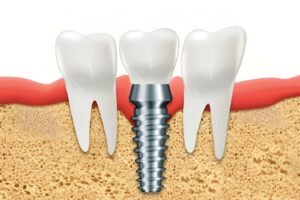
Traditional bridges and dentures replace the visible tooth but do not replace the root underneath the gum. Dental implants are unique because they act like artificial tooth roots, helping preserve the jawbone.
Why Dental Implants Are Often Recommended
Dental implants replace both the missing tooth and the root beneath it. A titanium implant is placed into the jawbone, where it integrates naturally with the bone over time.
Benefits of implants include:
- Preventing bone loss
- Restoring chewing strength
- Protecting neighbouring teeth
- Improving long-term comfort
- Maintaining bite balance
- Providing a natural appearance and feel
Unlike removable dentures, implants remain fixed securely in place and function similarly to natural teeth.
Implant vs Bridge vs Partial Denture vs Leaving the Gap
| Option | Replaces Tooth Root? | Protects Jawbone? | Affects Nearby Teeth? | Stability | Long-Term Outcome |
|---|---|---|---|---|---|
| Dental Implant | Yes | Yes | No | Excellent | Best long-term stability |
| Dental Bridge | No | No | Yes — adjacent teeth must be trimmed | Good | Effective but may increase stress on support teeth |
| Partial Denture | No | No | Sometimes | Moderate | Less stable and may move during eating |
| Leaving the Gap | No | No | Yes — teeth can shift | Poor | Higher risk of long-term complications |
Ahmed’s Clinical Recommendation
“Many patients believe a missing back tooth is not important because it cannot be seen. In reality, molars are critical for protecting your bite and jawbone. Replacing the tooth early with a dental implant is usually the most predictable way to prevent future complications and maintain long-term oral health.” — Ahmed
Adding an implant sooner rather than later often means simpler treatment, better bone preservation, and lower long-term costs.
Why Timing Matters
Early treatment after losing a molar can significantly improve outcomes.
Delaying treatment may lead to:
- More bone loss
- Greater tooth movement
- More complex implant placement
- Need for bone grafting
- Longer healing times
- Increased overall costs
In many cases, replacing the tooth earlier is simpler and more predictable than waiting several years.
Related reading:
Are Bone Grafts Necessary For Dental Implants?
Conclusion
Losing a molar without replacing it can trigger a gradual chain reaction inside the mouth. Teeth may shift, the jawbone can shrink, and chewing may become increasingly difficult over time. Although the changes may happen slowly, they can eventually affect your oral health, comfort, and appearance.
Dental implants help restore the missing tooth while also protecting the jawbone and surrounding teeth. Replacing a missing molar is not only about appearance — it is about maintaining long-term function and preventing future complications.
Book a Consultation at Old Town Dental Care
If you have lost a molar and are unsure about your options, the team at Old Town Dental Care can help. We provide clear advice, modern implant solutions, and personalised treatment plans designed around your oral health needs.
Book your consultation today and take the first step toward restoring your smile and protecting your long-term dental health.
Frequently Asked Questions
Can losing a molar affect my other teeth?
Yes. Nearby teeth can gradually shift into the empty space, leading to bite problems, uneven wear, and cleaning difficulties.
Will I experience bone loss if I do not get an implant?
Yes. The jawbone begins shrinking once the tooth root is missing because the bone no longer receives stimulation during chewing.
How does losing a molar affect chewing?
Molars are essential for grinding food properly. Losing one tooth can make chewing less efficient and place additional pressure on other teeth.
Are there visible changes if a molar is not replaced?
Over time, bone loss can reduce facial support and contribute to a more sunken appearance around the cheeks and jaw.
Is it more expensive to delay getting an implant?
Often, yes. Delaying treatment can lead to bone loss and tooth movement, which may require additional procedures such as bone grafting before implant placement.
Visit: https://oldtown-dentalcare.co.uk/single-dental-implants/
Last Updated April 2026